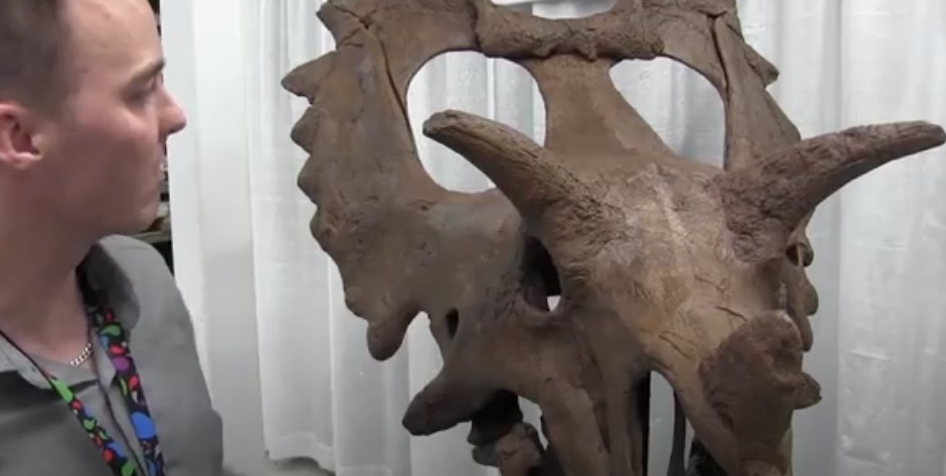
Researchers have discovered a new species of dinosaur named Lokiceratops rangiformis, described as the largest and most ornate of its kind.
Fossils unearthed in Montana reveal a plant-eating dinosaur with unique horns and frills, resembling a caribou.
Estimated to be 22 feet long and weighing 11,000 pounds, Lokiceratops lived about 78 million years ago.
“This is one of the most exciting dinosaurs I’ve had the privilege of working on,” paleontologist Dr. Joseph Sertich said. “So it has one of the neatest arrays of horns, and spikes along the edge of its frill, including the largest share of horns ever seen along the edge of a frill, and it’s also the largest member of its group of horned dinosaurs — one of the largest ever found in North America.”
“We laid them all out on a table and started to fit them back together,” paleontologist Dr. Mark Loewen said. “Turns out, they did fit together with a click, so they were just broken in the field before they were buried. What’s interesting is, as we pieced together the skull, it became very clear that this was a new dinosaur. We were seeing a dinosaur that no one in the world knew about for 78 million years.”
The find adds to the diversity of horned dinosaurs in North America, challenging previous assumptions and highlighting the need for further exploration to understand their relationships and habitats.
“When I started as a paleontologist, we expected to find only two ceratopsians at any given time in any place in western North America,” Loewen said. “What’s interesting is finding this animal next to four other different closely related species, and a fifth distantly related species, is like going to Africa, to the Serengeti, and finding five different species of elephants. This is completely unheard of.”
The fossils will be displayed in museums for public viewing and research.